
Quick Answer
News reports show that secret files were posted on a website called thejavasea.me. This group of files was named aio-tlp370. The file folder has computer setup rules, app passwords, secret pass keys, and computer activity lists.
An API key works like a digital pass key. It lets computer apps talk to each other without a person typing a password. This leak is important because stolen keys let hackers step right into private business systems. Regular internet users are mostly safe, but computer builders and tech bosses must fix this fast.
Main Point: Check if your team uses linked software tools, turn off any leaked pass keys right away, and turn on two-step login checks for all accounts.
At a Glance
| Item | Simple Details |
| Event Type | File leak and secret pass key exposure |
| Date Found | Early 2026 |
| Main Danger | Break-ins to online computers and linked software |
| Exposed Files | Computer settings, app keys, saved passwords, activity lists, code |
| Who Is Affected | Coders, system managers, and IT support teams |
| Risk to Normal Users | Low (mostly a problem if you reuse passwords) |
| Risk to Businesses | High (hackers could break into networks and steal cloud power) |
| Proven Facts | Setup files and app keys were posted on thejavasea.me |
| Unproven Claims | The total number of affected users and total money lost |
| Steps to Take | Turn off leaked keys, check login history, and turn on 2-step logins |
How We Checked This Information
This guide uses news reports, online safety warnings, and rules from trusted safety groups. Guidelines from groups like CISA, OWASP, NIST, and MITRE ATT&CK helped us explain these steps.
Safety experts cannot legally or safely test stolen files, so some facts are still unproven. We clearly separate proven facts from internet rumors throughout this guide.
What Is thejavasea.me Leaks AIO-TLP370?
The phrase thejavasea.me leaks aio-tlp370 describes a group of files posted on thejavasea.me. This website is a place where people share stolen computer files. The label aio-tlp370 is just the file group name. In computer safety, “AIO” means “All-In-One,” which means the folder holds many different files. “TLP” stands for Traffic Light Protocol, a color system used to show how secret a file is.
Event Timeline
- First Seen: Safety experts spotted new file folders listed on
thejavasea.me. - Public Warning: Tech websites warned that the files contained company passwords and system settings.
- Company Fixes: Companies started checking public code pages and turned off working keys to block unwanted logins.
- Ongoing Cleanup: IT safety teams are still scanning their computers for stolen pass keys and hidden entry doors.
 Leak Source (thejavasea.me)
        │
        ▼
 Stolen Tech Files
  ├─ System Settings
  ├─ Saved Passwords
  ├─ Activity Lists
  └─ Private App Keys
        │
        ▼
 Safety Dangers
  ├─ Cloud Network Break-ins
  └─ Linked System Attacks
Online rumors say millions of regular user accounts were hacked. Proven facts show the files mostly affect behind-the-scenes software, cloud tools, and business setups.
Regular Customer Data Leak vs. AIO-TLP370 Leak
Most data leaks expose personal customer details. Tech leaks expose digital keys to computer networks.
| Feature | Regular Customer Data Leak | AIO-TLP370 Tech Leak |
| Main Stolen Data | Names, email addresses, and home addresses | System settings, app keys, and internal activity lists |
| Who It Affects | Everyday internet users | Coders, DevOps teams, and network bosses |
| Main Attack Way | Fake trick emails and stolen user passwords | Using secret pass keys left inside computer code |
| First Fix Step | Change user passwords | Turn off working app keys and safety passes |
| Main Harm | Personal identity theft risk | Hacked software chains and network break-ins |
What Was Reportedly Exposed?
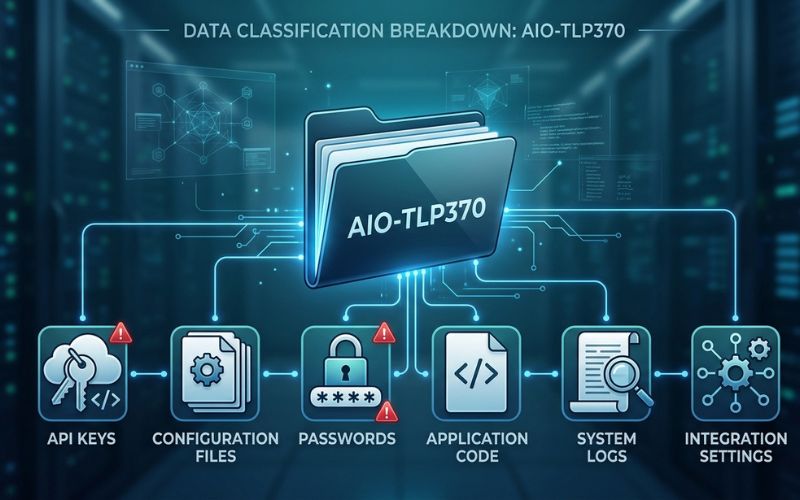
The leaked folder has several kinds of tech files that help run modern software.
Setup Files
Setup files store setup rules for online computers and apps. They tell programs where to connect and how to run. Leaked setup files reveal private internet paths, hidden routes, and cloud system plans.
API Keys and Secrets
An API key is a secret digital pass key. Programs use these keys to prove who they are and share data on their own. Anyone with a working key can pretend to be a real app to read databases or change settings.
Passwords and Access Passes
The leak includes saved usernames, passwords, and access passes. These secrets were left inside setup files and .env documents used while building apps.
App Code
App code contains the exact written steps that run software programs. When code leaks, hackers can study it off-line to find hidden bugs and weak spots.
System Activity Logs
System logs record everyday actions taken by apps and users. They hold admin usernames, network paths, and time records. Hackers can use these logs to track what workers do.
Linked Tool Details
The files include setup details for popular business software tools:
- Slack: Chat web links used for internal messages.
- PagerDuty: Work schedules and emergency alert setups.
- Splunk and Elasticsearch: Central systems used to gather server activity lists.
- Datadog: Tools used to track computer network health.
| Stolen Asset | Safety Danger | Normal Result |
| Setup Files | Shows server paths and network maps | Targeted scanning and map making |
| API Keys and Secrets | Gives direct access to linked apps | Unwanted cloud entry and data theft |
| User Passwords | Gives access to admin accounts | Account takeover and higher user control |
| App Code | Shows software design bugs | Creation of specific software attacks |
| System Activity Logs | Shows worker names and internet paths | Targeted trick emails (phishing) |
| Integration Details | Opens doors into linked business apps | Moving across connected networks |
Confirmed vs. Unconfirmed Claims
Separating true facts from internet rumors helps teams stay calm and make smart choices.
| Topic | True Fact | Unproven Claim |
| File Contents | The folder holds real server settings, activity lists, and app keys. | Claims that every file belongs to one single company. |
| User Impact | Business systems and computer coders face direct danger. | Reports that millions of personal customer accounts were stolen. |
| Scope | Secrets from specific software setups were made public. | Rumors that big global cloud companies were fully hacked. |
Who Is Actually Affected?
Your danger level depends on your job and whether you manage computer systems.
                                  [Start Here]
                                        │
             ┌──────────────────────────┴──────────────────────────┐
             ▼                                                     ▼
Do you use builder tools, cloud                     Do you use regular websites
servers, or logging systems?                        and everyday apps?
             │                                                     │
             ▼                                                     ▼
     [BUSINESS CHECKLIST]                                  [PERSONAL CHECKLIST]
  • Turn off working app keys                           • Stop repeating passwords
  • Check access logs                                   • Turn on 2-step login checks
Regular Internet Users
Regular users face low direct danger because this leak does not contain credit cards or home addresses. But if you use the same password for work and personal apps, a hacker could try that password on normal websites.
Coders and DevOps Engineers
Coders and DevOps engineers face high risk. If you saved app keys, secret pass codes, or .env files in public places, those secrets are now visible. Cybercriminals use fast automatic tools on sites like GitHub to steal public keys right away.
Safety and IT Teams
IT safety teams must check their networks for signs of unwanted visitors. They need to find connected tools like HashiCorp Vault, sign-in managers like Okta, and cloud services like Amazon Web Services (AWS), Microsoft Azure, or Google Cloud.
Why This Leak Is More Than Just a Data Breach
This event creates a big safety threat because modern software relies on trusted digital connections.
 Exposed Setup File
        │
        ▼
 Stolen Connection Key
        │
        ▼
 External Helper App
        │
        ▼
 Main Network Systems
        │
        ▼
 Private Business Files
When a connection key leaks, a hacker can use it to walk into a system without setting off safety alarms. Safety programs usually trust these keys because they belong to approved tools. Hackers use this trust to hop from an outer helper app deep into main company databases.
Real-World Attack Examples
Simple Example: The Leaked .env File
- A coder accidentally uploads a file named
.envwith a working AWS key into a shared project. - The file folder is posted on
thejavasea.me. - An automatic computer program scans the leak, steals the key, and logs into the cloud system.
- The hacker turns on extra cloud servers to mine digital money, running up huge bills.
- The safety team notices strange computer usage, turns off the key, and starts their emergency plan.
Other Attack Examples
Password Testing (Credential Stuffing)
Hackers take lists of usernames and passwords from leaked files. Automatic programs test these logins across hundreds of public websites to catch people who reuse passwords.
API Key Abuse
Bad actors take working app keys from setup files. They send direct commands to cloud systems to steal private files or use up server processing power.
Fake Log Creation
Hackers use stolen keys for logging platforms to pump fake items into company activity lists. These fake items confuse safety tools and hide active break-ins.
Scam Emails Using Work Details
Hackers read leaked activity lists and Slack setups to learn real worker names and project details. They use this information to write believable emails that trick workers into giving up admin passwords.
Linked System Attacks
A hacker uses a leaked key from a small helper tool to break into a large business partner. The hacker follows the connected software trail to enter private company networks.
Risk Chart
This chart shows how hard it is to spot attacks, how much work it takes to fix them, and the overall danger level for each stolen item.
| Data Type | Likelihood | Danger Level | How Hard to Spot | Fix Effort |
| API Keys and Secrets | High | High | Easy (using secret scanners) | Fast (replace the key) |
| Database Passwords | High | High | Medium | Fast (reset password) |
| System Settings | Medium | High | Hard | Slow (redesign system) |
| Internal Logs | Medium | Medium | Hard | Slow (check activity lists) |
| Reused Passwords | High | High (Personal) | Easy | Fast (update password) |
How to Check Whether You May Be Affected
Checking your risk helps you see if your personal accounts or company networks were exposed.
For Individuals
- Check password habits: See if you used the same password for personal accounts and work systems.
- Check account activity: Log into main accounts to check active sign-ins and unknown devices.
- Use leak checkers: Type your email address into trusted breach check sites to track known leaks.
For Businesses
- List connected tools: Make a list of every software tool linked to your main business network.
- Run secret scanner tools: Use tools like GitGuardian or GitHub Advanced Security to find hidden keys inside code folders.
- Check cloud access records: Review Identity and Access Management (IAM) records in AWS, Azure, or Google Cloud for strange activity.
- Inspect log reader tools: Check apps like Splunk, Datadog, or Elasticsearch for unknown connections or deleted activity lists.
What Individuals Should Do Right Now
If you think your details were leaked, complete these safety steps right away.
Personal Safety Checklist
- [ ] Stop reusing passwords: Create a new, strong password for every online account.
- [ ] Turn on Multi-Factor Authentication (MFA): Use two-step sign-in with an authenticator app instead of text messages.
- [ ] Use a password manager: Store hard passwords safely so you do not have to memorize or repeat them.
- [ ] Watch for fake emails: Ignore unexpected messages asking you to reset passwords or verify your details.
- [ ] Check connected app access: Remove third-party app access from your main email and social media accounts.
First 48-Hour Emergency Plan for Businesses
Tech teams need a clear, step-by-step plan to control damage after tech files leak.
 [Hours 0-6] ──────► [Hours 6-24] ─────► [Hours 24-48]
 Stop & Cancel        Check & Inspect    Inform & Repair
First 6 Hours: Immediate Control
- Turn off working keys: Cancel all app keys, secret pass codes, and safety passes found in the leaked files.
- Reset admin passwords: Change main passwords for all affected system accounts.
- Block unknown internet addresses: Block unfamiliar internet addresses spotted in early network alerts.
First 24 Hours: Checking
- Check login records: Search sign-in logs for strange requests or unauthorized admin activity.
- Check software connections: Verify connections to tools like Slack, PagerDuty, and cloud storage folders.
- Check code creation steps: Inspect software build tools, like GitHub Actions or GitLab CI, to make sure build steps were not changed.
First 48 Hours: Fixing and Reporting
- Fix code bugs: Remove hardcoded keys from setup scripts and software build files.
- Update alert rules: Adjust safety software rules to catch unexpected API calls in the future.
- Tell important leaders: Report verified damage to privacy officers, legal advisers, and company bosses as required by internal rules.
Warning Signs of a Hacked Network
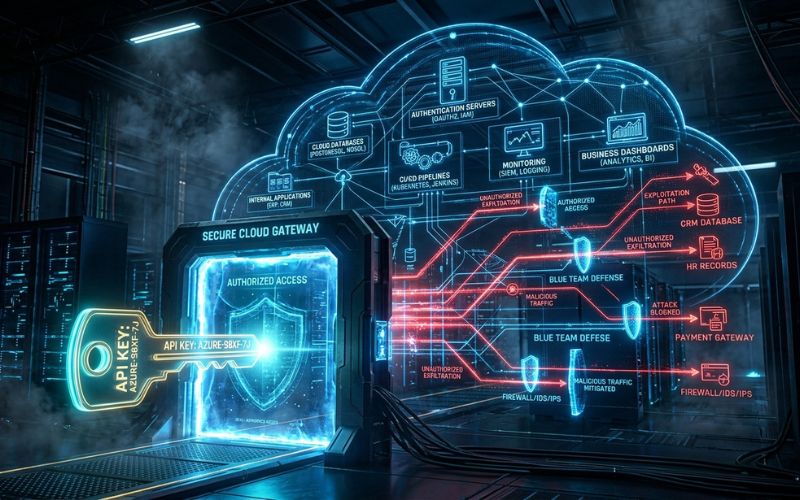
Watch for these early warning signs that a hacker is using stolen keys inside your systems:
- Unusual API jumps: A sudden jump in API requests outside regular work hours.
- New admin users: Accounts created without approval from the IT team.
- Strange login places: Sign-in requests coming from unfamiliar countries or blocked places.
- Unplanned cloud growth: New cloud servers starting up without approval from DevOps teams.
- Changed safety settings: Safety tools or activity logging systems turning off unexpectedly.
Detection and Monitoring Advice
Safety teams should update their processes to catch unwanted visitors quickly.
- Flag strange sign-ins: Set alerts for logins that happen at odd hours or from new places.
- Track user permission changes: Get instant alerts whenever a user account gets higher administrative powers.
- Watch API traffic: Look out for large data downloads or strange commands sent to cloud systems.
- Use secret scanning: Use automatic scanner programs to block code updates that contain secret keys before they go live.
- Enforce Zero Trust rules: Require every user and app to prove who they are every single time they make a request.
Legal, Privacy, and Rules to Follow
Leaking system logs and passwords can create legal duties for companies.
- GDPR: Applies if leaked server logs contain European Union IP addresses or personal user details.
- CCPA: Requires warnings if California resident data is exposed due to poor safety.
- NIS2 and SOC 2: Rules that require companies to keep clear records for managing vendor risks and report system break-ins quickly.
- Internal Audits: Safety teams must write down every cleanup step to prove they followed the law during official reviews.
Long-Term Prevention Lessons
Stopping future leaks requires moving from quick fixes to permanent safety habits.
            [Central Secret Vault]
                      │
                      ▼
          [Automatic Key Changing]
                      │
                      ▼
         [Strict Limited Access]
                      │
                      ▼
          [Continuous Secret Scan]
- Keep secrets in one safe place: Use dedicated vault software like HashiCorp Vault or AWS Secrets Manager instead of saving pass codes in plain text files.
- Give minimal permissions: Set user rules so software tools get only the exact access they need to do their job.
- Change keys automatically: Use automatic systems to change API keys and passwords frequently so stolen secrets expire quickly.
- Protect code build steps: Add automatic safety checks into software build tools to stop coders from uploading secret keys.
- Use Zero Trust thinking: Assume internal networks are unsafe and verify every single request individually.
Frequently Asked Questions
What is thejavasea.me leaks aio-tlp370?
It is a group of secret tech files shared on thejavasea.me under the bundle name aio-tlp370. The package includes app keys, computer settings, passwords, and activity lists.
What was reportedly exposed?
The leaked files contain system settings, app keys, passwords, pieces of app code, and connection data for tools like Slack, Datadog, Splunk, and PagerDuty.
Is there proof that personal passwords were leaked?
No widespread customer password leak has been proven. The bundle mainly contains tech pass keys used by software systems.
Could my company be affected?
Your business could be affected if your computer coders used exposed setup scripts or if working app keys linked to your cloud systems were in the leak.
How do I know if my company uses AIO-TLP?
Your IT or engineering team can check code folders, setup scripts, and software connection files to look for references to AIO-TLP.
What should computer coders do after learning about this leak?
Coders should run secret scanning tools on their code folders, turn off exposed pass keys right away, and store secrets in a safe digital vault.
Should API keys be changed?
Yes. API keys must be turned off and replaced right away because stolen keys let hackers bypass normal passwords and enter cloud systems directly.
What are spoofable connectors?
Spoofable connectors are software links that do not check identities carefully. Hackers with stolen keys can use them to send fake data or commands into trusted business networks.
Why is this considered a connected software risk?
It is a risk because a single stolen key from a helper tool can let hackers step into main databases and connected partner networks.
Can normal users ignore this event?
Normal users face low direct danger, but they should still make sure they do not reuse work passwords on personal websites.
What monitoring changes should safety teams make?
Safety teams should set alerts for strange API usage, unexpected logins, changed user power levels, and new third-party software connections.
Is downloading leaked files safe or legal?
Downloading leaked files is unsafe and can lead to legal trouble. These file folders can contain dangerous viruses, and holding stolen data can break privacy laws.
Handpicked For You:
Tech Hacks PBLinuxGaming Explained (2026): Simple Linux Gaming Fixes to Boost FPS and Stop Lag
New Software 418dsg7 Explained: Features, Pricing, Setup, Security & Honest Review (2026)
Disclaimer:
This article is for informational and educational purposes only. It does not provide legal, cybersecurity, or professional advice. Some images in this article may be AI-generated for illustration only. All trademarks, logos, product names, and copyrights belong to their respective owners. Always verify important security information with official sources.